Self-Serve vs Sales-Led SaaS: Why One Ad Strategy Cannot Serve Both
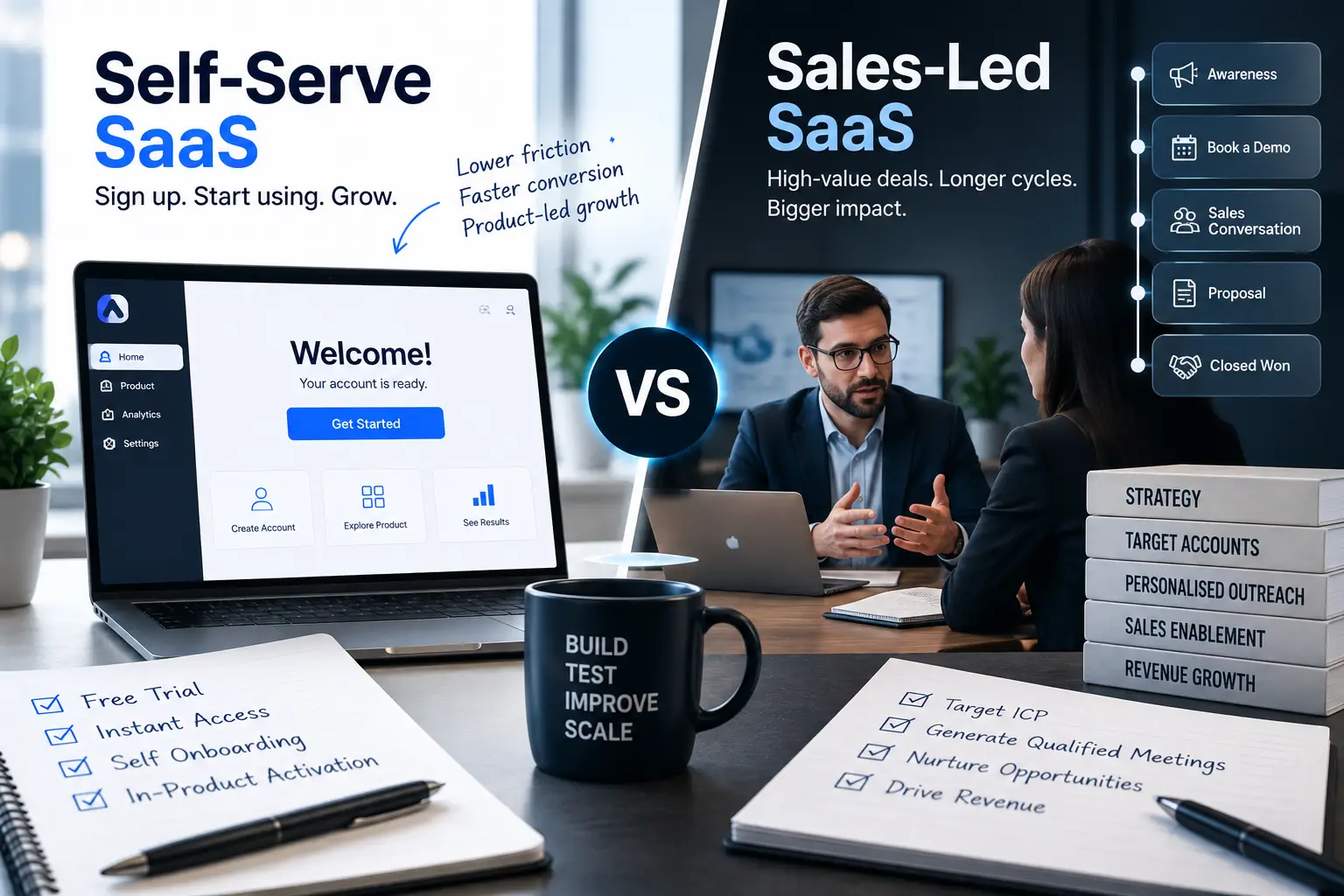
A low-cost self-serve signup and an enterprise demo request have completely different economics. Treating them as one conversion can quietly push ad spend toward the wrong customer.
Drive conversions with performance marketing services that pay for themselves. Campaigns are planned, launched, and refined using real revenue data, not platform-reported estimates. Continuous testing across audiences, and bidding keeps spend moving toward what converts. You get measurable outcomes and a clear line from budget to revenue.





A full-funnel paid program for B2B SaaS — strategy, tracking, build and optimisation handled by one specialist instead of passed down a chain of account managers. Take the whole program or the single piece that is broken.
Search, Performance Max, Demand Gen, and YouTube campaigns structured by product and intent, with weekly search-term hygiene to protect efficiency and lead quality.
Job title, seniority, company size, tech stack, and account targeting for high-ACV offers, with clear comparisons between lead forms and landing pages.
Microsoft and Bing campaigns capture lower CPCs and a senior search audience, with minimal additional build effort once your Google Ads structure is established.
Community and interest targeting reaches technical, developer, and practitioner audiences, helping B2B SaaS brands connect with buyers who ignore traditional paid channels.
Prioritised test backlogs, genuine A/B testing, and form or signup friction removal focused on improving qualified pipeline rather than raw conversion rates.
Landing pages align search terms, ads, products, and intent, ensuring users searching for specific use cases reach relevant experiences instead of generic pages.
MQL and PQL definitions, lead scoring, and structured feedback loops push sales-accepted and closed-won signals back into bidding for stronger lead quality.
Separate campaigns, budgets, and targets for self-serve and sales-led motions, because low-cost signups and enterprise demos require completely different CPA goals.
GA4, Google Tag Manager, server-side tagging, and offline conversion imports configured so platforms optimise toward closed revenue instead of simple form fills.
Signup, activation, product-qualified lead, and paid conversion tracking separated into distinct signals, so bidding recognises which actions actually lead toward revenue.
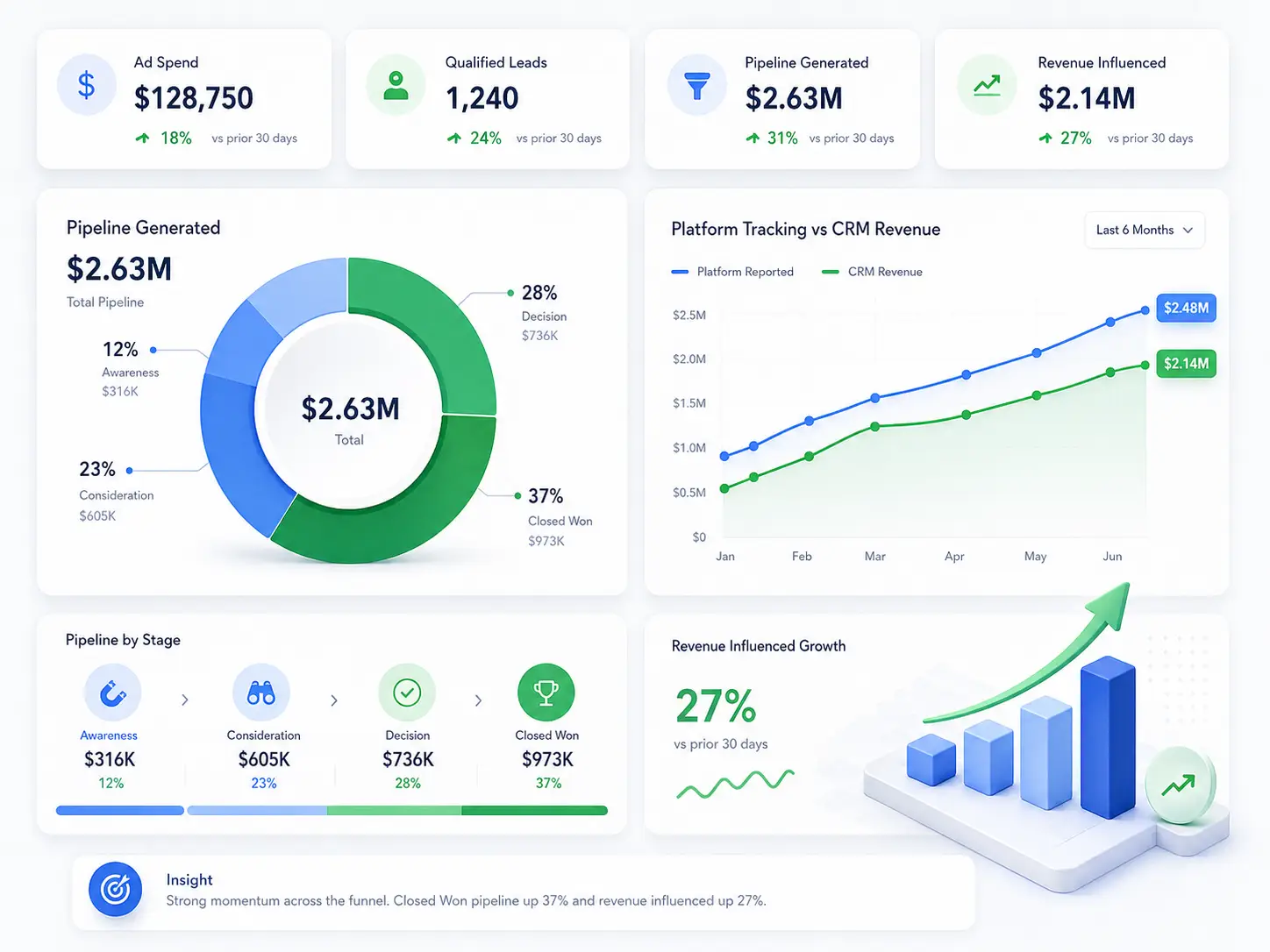
HubSpot or Salesforce reporting connects spend to revenue, tracking cost per MQL, SQL, customer, blended CAC, and CAC payback across campaigns.
A fixed-scope teardown identifies why an account is spending without returning, then provides a ranked fix list your team can execute confidently.
BOFU, MOFU, and TOFU keyword architecture with commercial-intent scoring, including alternatives, comparisons, software searches, and competitor brand terms your buyers use.
Channel mix, budget allocation, and funnel-stage planning built backwards from pipeline and ARR targets, ensuring every decision supports measurable business growth.
Ad copy and offer teardowns, auction insights, share-of-voice analysis, brand defence, and conquesting campaigns built around verified competitors and comparison intent.
Early positioning across ChatGPT and AI answer surfaces reaches software buyers where evaluation increasingly begins, while competition remains relatively thin and accessible.
End-to-end demand generation connects keyword, click, trial or demo, and closed ARR, with one specialist accountable across the entire paid acquisition journey.
First-party lists, customer match, custom segments, competitor-domain audiences, and target-account lists built around your actual ICP instead of generic platform presets.
A structured, measurement-first process built for B2B SaaS—so every campaign is connected to qualified pipeline, CRM data, and revenue.
We audit your ad accounts, tracking, CRM, search terms, funnel structure, and landing pages to identify where spend is being wasted and where growth is being missed.
We rebuild the measurement layer so conversions, MQLs, opportunities, and customers are tracked separately and the ad platforms optimise toward the outcomes that actually create revenue.
Campaigns are restructured by buyer intent, product, and funnel stage. We improve targeting, keywords, creative, landing pages, bidding, and lead-quality feedback based on real performance data.
Once qualified-lead costs are stable, we increase spend into the channels and campaigns that have earned it. Reporting connects ad spend directly to pipeline, closed revenue, CAC, and ROAS.

B2B SaaS Performance Marketing Specialist Moazzam has 10,000+ hours in paid media and has managed more than PKR 1B in ad spend across B2B SaaS campaigns. His work focuses on the connection between paid media and the CRM—conversion tracking, PQL and MQL measurement, campaign optimisation, landing pages, audience strategy, and revenue reporting. The same specialist who diagnoses the account also builds, optimises, and reports on it.
B2B SaaS Performance Marketing Specialist Moazzam has 10,000+ hours in paid media and has managed more than PKR 1B in ad spend across B2B SaaS campaigns. His work focuses on the connection between paid media and the CRM—conversion tracking, PQL and MQL measurement, campaign optimisation, landing pages, audience strategy, and revenue reporting. The same specialist who diagnoses the account also builds, optimises, and reports on it.
Hands-on experience across Google, LinkedIn, Microsoft, Reddit, ChatGPT Ads, and leading CRM platforms—connecting paid media performance directly to qualified pipeline and revenue.






Challenge: A global B2B RegTech platform was scaling paid media, but lead volume was growing faster than its ability to prove what that spend returned in pipeline and revenue.
Solution: The account structure and tracking were rebuilt around funnel stage, buyer intent, MQLs, and CRM outcomes. Google, Microsoft, and Reddit Ads were then optimised toward qualified opportunities instead of raw form submissions.
Impact: The program generated 30,000+ tracked conversions, 11,000+ form submissions, a 40% MQL rate, approximately 440 customers, and a 17x return on ad spend.
The account did not need more traffic. It needed the platforms to understand which conversions were actually worth buying.
Performance marketing services cover paid acquisition where every rupee is tied to a measurable outcome — a qualified lead, an opportunity, or closed revenue — rather than to impressions or reach. For B2B SaaS specifically it means paid search and paid social management, conversion and PQL tracking, audience building, landing page optimisation and CRO, all optimised against pipeline and ARR rather than against traffic or signup volume.
An agency sells you a team and staffs the day-to-day work to whoever is available. Here you work directly with one specialist for the whole engagement — the same person audits, builds, optimises and reports. Fewer accounts, no handoff, and no layer between you and the person in the account.
Google Ads, LinkedIn Ads, Microsoft (Bing) Ads, Reddit Ads and ChatGPT Ads. All run in-house. The right mix depends on your deal size, sales cycle and where your buyers actually research — most B2B companies are over-invested in one channel and completely absent from two that would work.
Tracking and structural fixes usually show up within two to four weeks, because they are mechanical. Meaningful movement in qualified pipeline takes one full sales cycle — for most B2B SaaS that is 60 to 120 days, longer if there is a security or procurement review. Anyone promising qualified SaaS pipeline in three weeks is describing trial signups.
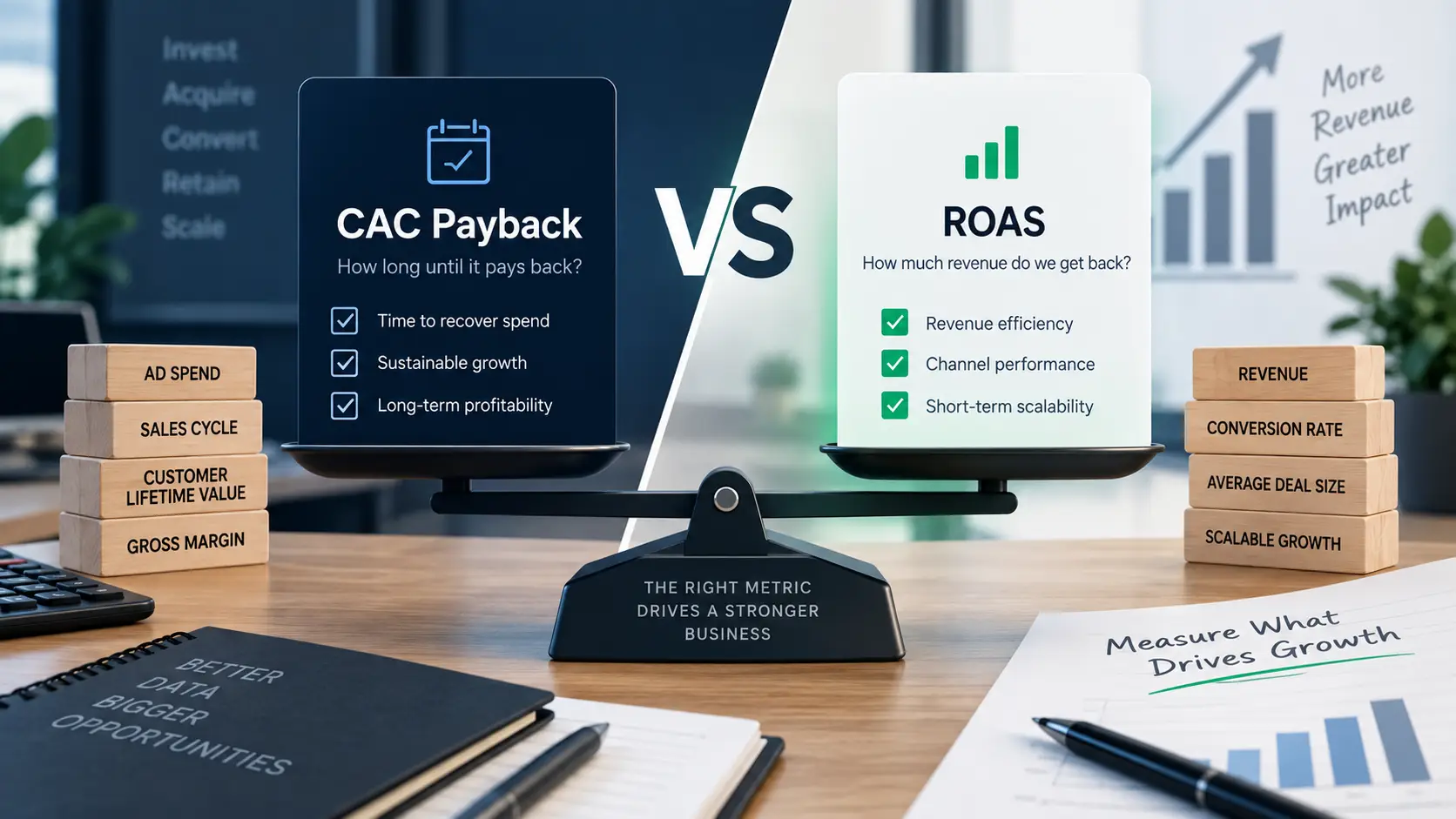
Across the accounts I have run, pipeline ROAS has landed between 15x and 20x, with 4x to 6x on closed revenue. Those numbers depend entirely on ACV, close rate and sales cycle — a $2,000 self-serve product and a $200,000 enterprise contract cannot be held to the same figure, and in subscription businesses the honest measure is CAC payback rather than a single ROAS number. The first thing any engagement establishes is what a realistic target looks like for your business specifically.
No — that is usually the first thing I do. Most accounts I audit have conversion actions that double-count, misfire, or never reconcile with the CRM. Fixing the measurement layer is not optional housekeeping; it is what makes every optimisation after it valid.
Both, but never with the same account structure. A product-led motion optimises toward activation and product-qualified leads; a sales-led motion optimises toward demo requests that sales accepts. Most accounts I audit are running both motions out of one budget against one CPA target, which quietly funds the cheaper conversion and starves the one that produces revenue. Separating them is usually one of the first structural fixes.
Because the problems are specific and repeatable. Long evaluation cycles, free trials that mostly do not activate, comparison and alternative-to search behaviour, technical buyers who never fill in a form, and a gap between what the ad platform counts and what lands in the CRM. Ten thousand hours in that one problem set is worth considerably more to a SaaS company than the same hours spread across five industries.
There is no published floor, because the honest answer depends on your ACV and sales cycle. A company with a $30,000 contract value can justify a program on far less spend than one selling at $3,000. What matters more is whether you have enough conversion volume for the data to be trustworthy. That is the first thing I look at, and I will tell you if your budget is better spent on one search campaign built properly than on a full program.
Yes. Most of my work has been on globally targeted B2B campaigns across North America, Europe, the Middle East and Asia-Pacific, in a category where buyers are regulated and geographically spread.
Thirty minutes. You share what you are spending and what you are getting. I tell you where I think the money is leaking and whether I am the right person to fix it. If I am not, I will say so on the call.
Practical guides, strategies, and real-world lessons on paid media, tracking, pipeline growth, CAC, and revenue-focused performance marketing.
A low-cost self-serve signup and an enterprise demo request have completely different economics. Treating them as one conversion can quietly push ad spend toward the wrong customer.

Performance Marketing Specialist
Moazzam specializes in performance marketing for B2B SaaS, managing paid acquisition across Google, LinkedIn, Microsoft, Reddit, and ChatGPT Ads. With PKR 1B+ in managed ad spend, he focuses on tracking, qualified pipeline, and revenue growth—not vanity metrics.
Performance Marketing Services with related competencies to effectively tackle your business challenges.
Five steps. You know what happens in each one, what you get at the end of it, and when.
I get read access to your ad accounts, analytics and CRM, and find out what is actually true. Spend by intent, search term waste, conversion action integrity, platform-to-CRM discrepancy, landing page and offer alignment, competitor positions in the auction.
a ranked findings document — what is losing money, what is working, and the order to fix it in.
Nothing gets scaled on a measurement layer I cannot trust. Conversion actions get rebuilt and de-duplicated, GA4 and GTM are corrected, offline conversion import is connected from the CRM, and lead stages are mapped so a form fill, an MQL and a customer are three different signals rather than one.
a tracking layer where the platform number and the CRM number reconcile, and a report that shows both.
Account structure by intent and solution. Keyword architecture split by funnel stage. Negative keyword framework. Audiences and ABM segments built from your ICP. Ad copy written against the objection, not the feature. Landing pages aligned one-to-one with the intent that arrives on them.
a rebuilt account, a documented structure, and every change logged so nothing is a black box.
Search term review and negatives. Bid and budget shifts against qualified-lead cost, not lead cost. CRO tests running on the highest-traffic pages. Creative and offer iteration. Lead quality reviewed with your sales team, then fed back into bidding.
a weekly change log and a standing call. You always know what changed and why.
Once cost per qualified lead is stable and predictable, spend goes up — into channels, geographies and audiences that have earned it. Reporting rolls up to spend, pipeline, closed revenue and blended CAC.
a monthly report your CFO can read without translation, and a quarterly plan for the next scale step.
Five steps. You know what happens in each one, what you get at the end of it, and when.
Ad Spend
Leaads
ROAS
A B2B SaaS company selling identity verification, KYC, AML and compliance software to regulated businesses worldwide. Long sales cycles, technical evaluators, a procurement and security review before anyone signs, heavily contested category keywords, and a purchase where the wrong lead costs sales weeks of wasted qualification.

Not outsourced, not white-labelled, not “we have a partner for that”.
PKR 350M (approx. US$1.2M)
4% (approx. 440 customers)
Google Ads, Microsoft Ads, Reddit Ads
17x
30,000+
PKR 31,800 (approx. US$112)
11,000+
PKR 79,500 (approx. US$279)
40% (approx. 4,400 MQLs)
PKR 795,000 (approx. US$2,790)
The 30,000 conversions break down into 11,000 form submissions plus sign-ups, contact requests and free demo bookings — every one of them a tracked action with a different weight in bidding, not a single undifferentiated "conversion" number.
Nothing here was a growth hack. The account did not need more traffic — it needed the platform to be told which conversions were actually worth buying. Once offline conversions were flowing back from the CRM and the structure separated intent by funnel stage, the same spend started buying a different quality of lead. The 40% MQL rate is the number to look at, not the 17x.
Not outsourced, not white-labelled, not “we have a partner for that”.
The volume channel. Search, Performance Max, Demand Gen and YouTube, structured by intent so high-commercial-intent terms are never funded out of the same budget as research traffic.
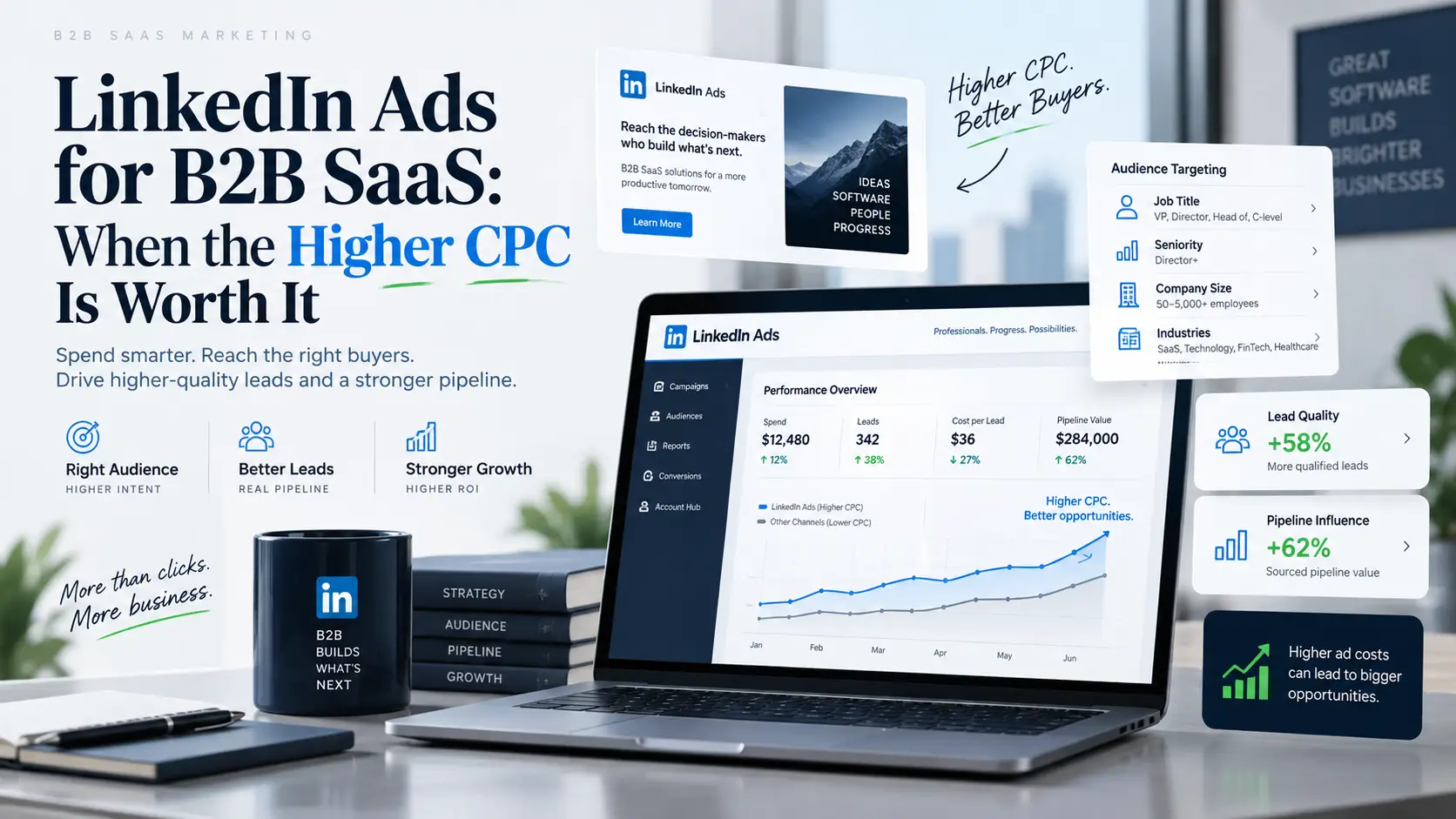
The precision channel for B2B. Job title, seniority, company size and target account lists — worth its CPM only when the deal size and the tracking both support it.
The most consistently under-used B2B channel. Lower CPCs, an older and more senior search audience, and very little incremental work once Google is structured correctly.
Where technical, developer-adjacent and community-driven buyers actually spend their research time — and where most B2B competitors are not bidding.
AI answer engines are becoming a first stop for B2B research. Early, measured positioning here is cheap now and will not be for long.
Most agencies sell you a senior strategist in the pitch and staff you with an executive who is three months into the industry and managing nine other accounts. The person who understood your business is never in the account again.
Here, the person who audits the account is the person who builds it, optimises it weekly, and sits on the call when the numbers are bad. 10,000 hours of that, across more than PKR 1 billion in spend.
Managed spend
Hours hands on a specialist
I lead performance marketing for a B2B SaaS company in identity verification and compliance, where I run paid acquisition across Google, Microsoft, LinkedIn, Reddit and ChatGPT Ads into a market of regulated buyers with long sales cycles and heavy scrutiny on every rupee of spend.
That is roughly 10,000 hours in ad accounts and over PKR 1 billion in managed spend. I have worked across other B2B and service categories along the way, but B2B SaaS is where I have gone deepest and it is the only thing I take on now. Different products, same underlying problem: the signup the ad platform counts and the account that actually converts are rarely the same thing.
My work sits at the join between the ad platform and the CRM. Conversion tracking and measurement infrastructure. Trial, signup and PQL tracking. Keyword research and intent mapping. Funnel optimisation and lead quality. CRO and landing page optimisation. Audience building and ABM segments. Competitor research. And CRM-integrated reporting in HubSpot, so spend, MQLs, customers and ARR sit in one view instead of three arguments.
I am not an agency and I do not want to be one. I take a small number of SaaS accounts so that the person who diagnosed the problem is the person who fixes it.

Managed spend
Hours hands on a specialist
pipeline ROAS
revenue ROAS
SaaS only
Google | LinkedIn | Microsoft | Reddit | ChatGPT Ads
I work with B2B SaaS companies. Not e-commerce, not local services, not consumer apps. One kind of business, one set of problems, ten thousand hours inside them.
Thirty minutes, no deck, no pitch. We look at what you are spending, what your tracking is really reporting, and where the gap between the two is costing you pipeline. You will leave with two or three specific things to fix whether or not we work together.
Prefer to write first? Send the account you want looked at and what it is spending.